


In 1975, two things happened that had more to do with each other than anyone realized.
The first was a fad. Inventors Josh Reynolds and Maris Ambats filled a ring with thermochromic liquid crystals and told America it could read your emotions. Blue meant calm. Violet meant happy, etc. Mood rings sold by the millions — I remember handling one as a first grader — and every one came with the same implicit promise: finally, a window into what someone is feeling, worn right there on the hand for anyone to see.
However, the science was thin. Mood rings measured skin temperature, nothing more. But the longing behind them was dead serious. People have always wanted to catch a glimpse inside the person they love.
The second thing that happened in 1975 got less attention at the shopping mall. A developmental psychologist named Ed Tronick presented what became known as the still-face experiment. A mother plays with her baby by cooing, mirroring and responding. Then, on cue, she goes expressionless. Totally blank. Within seconds, the baby notices. The baby smiles, points, shrieks, works every trick in its tiny repertoire to bring mom's face back online. When nothing works, the baby collapses into distress.
Fifty years and hundreds of replications later, the finding holds: we are wired from birth to read the faces of the people we're attached to. A responsive face means I'm seen, I'm safe. A blank one sets off every alarm in the system.
And that wiring never gets uninstalled. Adults run the same experiment on each other every day, but this time it's broken out of the lab.
Faces go quiet for all kinds of reasons. It could be new medication that flattens expression while leaving the feelings intact or maybe just a long day that left nothing in the tank. The person inside may be content. Heck, they may even be happy. But the window has fogged over, and their partner is on the other side of the glass, getting no signal.
An attachment system starved of signal does not wait patiently for more data. It fills in the blank, usually with the worst-case story. I did something wrong. One partner is quietly enjoying the evening; the other is quietly bracing for impact. Nobody's lying. The mood ring is just broken.
You might not have made this connection, but fifty years later, we finally built a ring that works. Millions of people now wear smart rings that track heart rate, sleep, stress — even skin temperature, the very thing the mood ring pretended to read. Smart rings now account for three-quarters of all fitness tracker revenue in this country. The technology the 1970s promised has arrived, and it's genuinely good.
But notice where the readout goes: to an app, on your phone, facing you. Half a century of engineering, and the window still points inward. The one thing the mood ring promised — a signal your partner could see — remains stubbornly unavailable in hardware.
It's only available in language.
For the quiet-faced partner, that means narrating what the face won't: "I know I don't look like it right now, but I'm really enjoying this." It feels awkward at first, like announcing the weather indoors. It is also one of the most generous things one partner can do for another's nervous system.
For the partner reading the blank screen, it means checking instead of concluding: "I can't tell what's happening with you right now — can you give me a reading?" A question like that turns a spiral into a conversation.
In session, this is the quiet work of making the implicit explicit. We are helping one partner put words to an inner world that isn't reaching the surface, and helping the other stay curious a few seconds longer than their alarm system wants to allow. When it lands, you can watch both bodies settle. The signal is back. It's pretty cool to see.
So, yeah, the mood ring was a gimmick. The wish it answered never was. We've spent fifty years and billions of dollars building better rings, and the readout our partners actually need still can't be worn on a finger.
We can just tell each other.
Now, on with this week's Ohio EFT newsletter:
How Couples Therapists Fight With Their Partners.
by Jancee Dunn on July 20th, 2026
They spend their days helping people hash out conflicts. Here’s what they do at home.
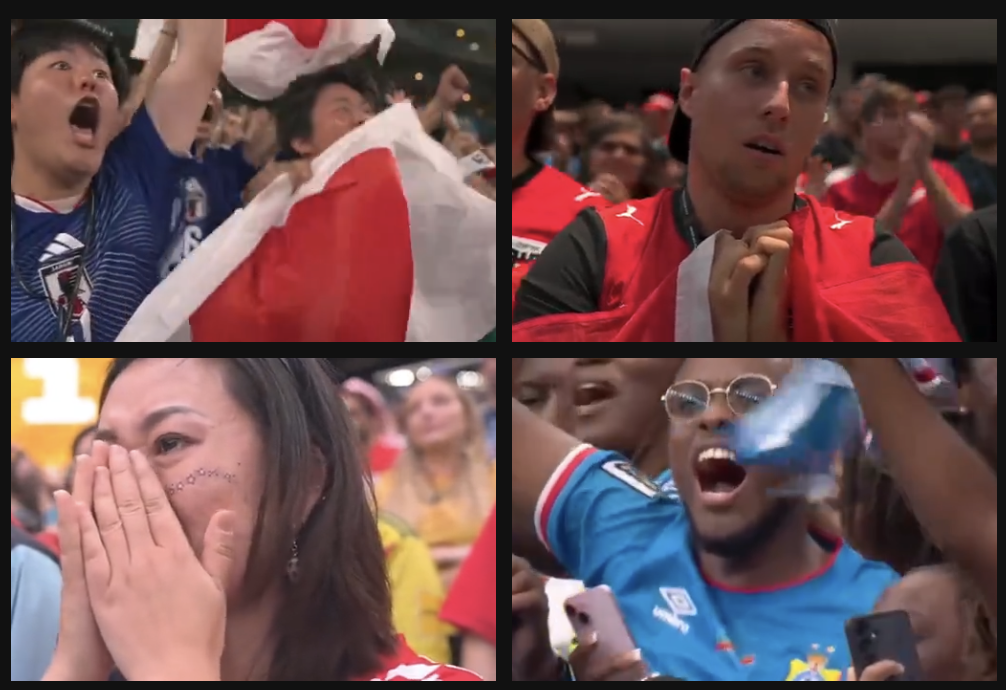
Fans Feel Every Emotion At The World Cup.
by K.K. Rebecca Lai on July 20th, 2026
From hope and joy to agony and defeat, see how the rawest spectator reactions tell the story of the tournament through fan reaction videos.
I’m A Therapist. Here Are 5 Steps To Reduce Resentment In Your Relationship.
by Joshua Coleman on July 20th, 2026
Resentment can be a relationship killer, but couples can take steps to create goodwill and move past conflict.
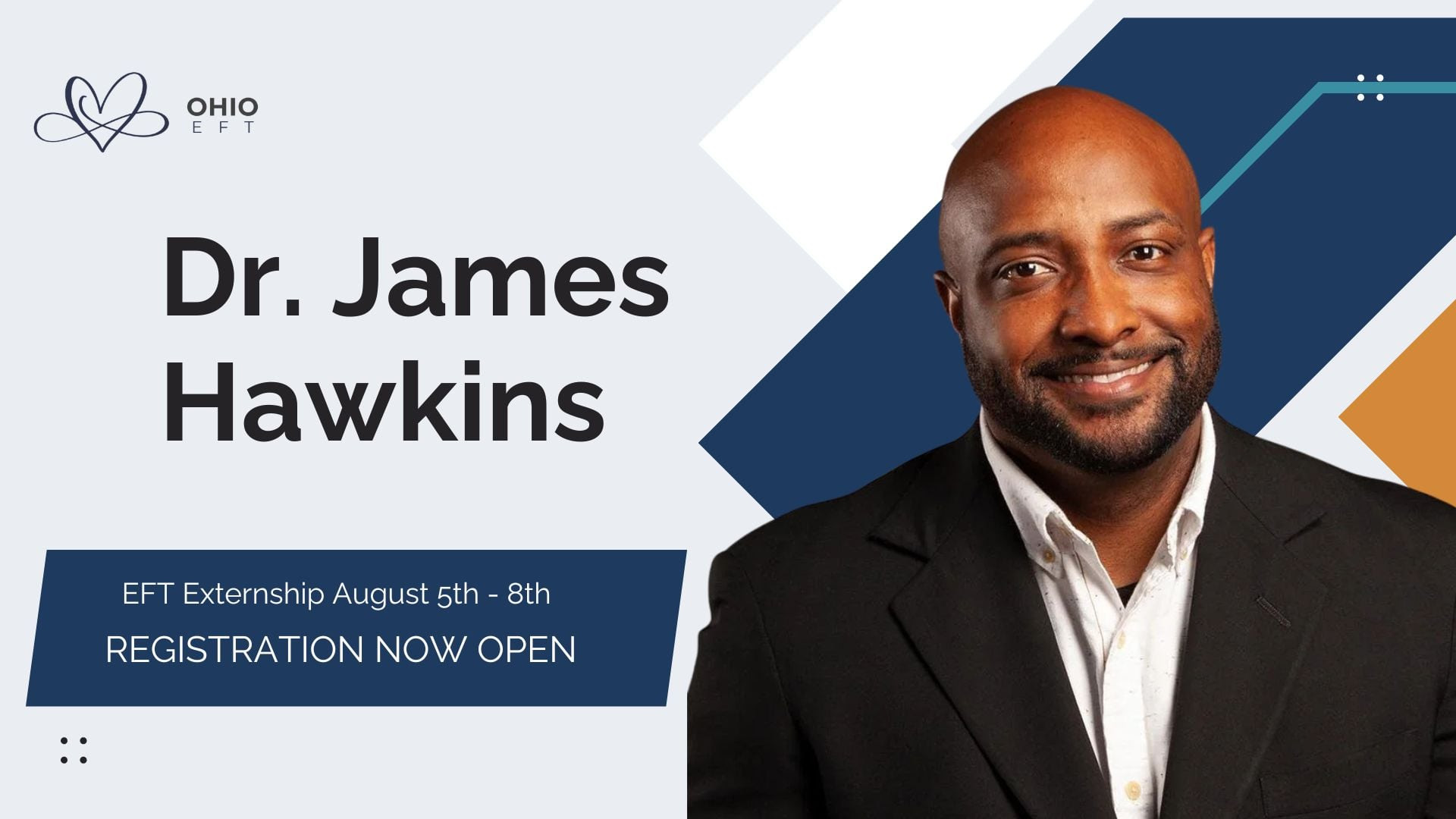
Last Call For Columbus: EFCT Externship With Dr. James Hawkins - August 5-8.
by Ohio EFT on July 20th, 2026
Every couples therapist should attend an Emotionally Focused Couples Therapy (EFCT) Externship!
If you work with couples or want to feel confident helping partners repair, reconnect, and rebuild trust, this is the place to begin.
The 4-day immersive training introduces therapists to the science, structure, and clinical techniques of EFCT, one of the most research supported approaches for helping couples heal relationship distress.
Developed from attachment science, EFCT helps therapists understand the underlying emotional patterns driving conflict and provides a clear roadmap for guiding couples toward secure bonding, emotional safety, and lasting change.
The externship is not just lectures. It’s an experiential learning experience where therapists learn through:
• Live lectures and teaching
• Observation of a real EFCT session with a couple
• Video demonstrations of EFCT interventions
• Breakout groups and experiential role-play practice
• A step-by-step clinical roadmap for working with couples
For those interested in specializing in EFCT, externships are the first foundational step in the pathway toward becoming EFCT certified.
Many therapists say the externship transforms the way they understand relationship distress, allowing them to effectively help couples, their families, and communities.
This August the Ohio EFT Community is honored to host Dr. James Hawkins, PhD, LPC "Doc Hawk", an ICEEFT certified EFCT trainer, supervisor, and therapist known internationally for his work helping therapists deepen relational healing in couples, families, and communities.
@doc_hawk_lpc brings deep clinical experience, passion for attachment-based therapy, and powerful teaching that makes EFCT come alive for clinicians.
If you want to:
• Feel more confident working with couples
• Understand the emotional cycle beneath conflict
• Help partners create secure, lasting connection
• Strengthen your own relationships…this training will change the way you practice therapy.
Join the Ohio EFT Community for this powerful learning experience at THE Ohio State University!
Click here to sign up!
The Next Ohio EFT Virtual Call - Friday, July 31st.
by Ohio EFT on July 20th, 2026
Join us at 9:00am on Friday, July 25th as we kick off a new discussion series after wrapping up nine months on the steps and stages of EFT.
This month we explore how EFT and the Gottman Method approach affair recovery — where the two models overlap, where they diverge, and how clinicians can draw from both intentionally.
Hope you can make it!
Does Your Partner Keep You Up At Night? Consider A Sleep Divorce.
by Cheyenne Buckingham on July 20th, 2026
Sleeping separately doesn’t mean your relationship is doomed. In some cases, the opposite may actually be true.
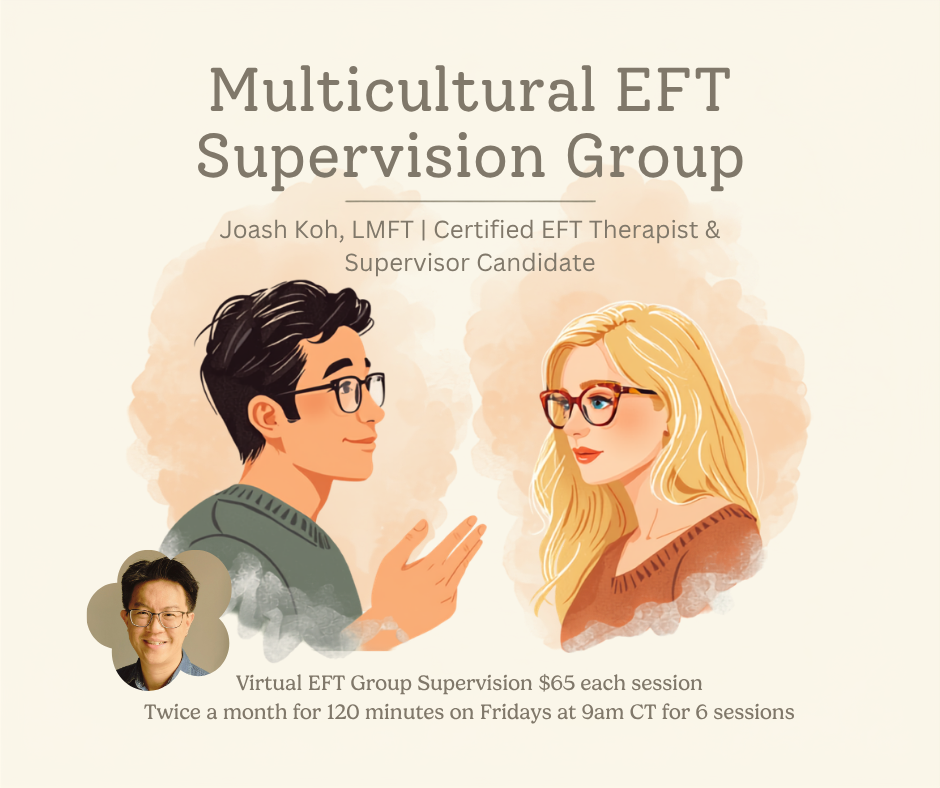
New Multicultural EFT Virtual Supervision Group.
by Joash Koh on July 20th, 2026
I’m Joash Koh, a Licensed Marriage and Family Therapist, an ICEEFT-Certified Emotionally Focused Couples/Individual/Family Therapist, and an EFCT Supervisor Candidate, based in Nashville, TN (Yes, I’m finally back in Nashville!!).
I’m also a co-founder and co-leader of EFT Asians in the Americas (AIA), an EFT community group for Asian EFT therapists and supervisors, supporting their growth. I integrated trauma-informed approaches, a multicultural lens, and EFT philosophy and interventions. My supervision mentors are Dr. Bell, LMFT (EFT Supervisor, We Heart Therapy), and Sarah Jin, LMFT (EFT Supervisor, AIA co-founder and co-leader).
I’m starting a new multicultural EFT supervision group on August 21st.
This group is for therapists who have completed Core Skills and want a warm, supportive, collaborative space to deepen their EFCT work with couples. We would explore adopting a multicultural orientation framework with couples from diverse backgrounds.
Group Details:
- Fridays | 9:00–11:00 AM CT via Zoom
- $65/session
- Limited to 6 participants
- 6 sessions | 21st Aug, 4th Sept, 18th Sept, 2nd Oct, 16th Oct, 30th Oct
The Comforting Resurgence Of ‘Grandma Hobbies’.
by Kate Brennan on July 20th, 2026
In search of calm and community, new generations are learning centuries-old skills.
The Strange Phenomenon Of ‘Terminal Lucidity’.
by Billy Brennan on July 20th, 2026
As they near death, some dementia pateints recover mental faculties assumed to be long lost. Researchers want to know why.


